Yoga for Strength: 7 Poses That Build Real Muscle
Yoga isn’t just flexibility. When you use the right poses, it becomes full‑body strength training that builds muscle, stability, and joint control without heavy weights. The key is time under tension, controlled breathing, and progressive overload through longer holds, slower tempo, and cleaner form. This guide gives you seven strength‑building poses plus a simple plan to make them work like a gym session.
Why Yoga Builds Real Strength
Strength isn’t only about lifting heavy. It’s the ability to create tension, maintain position under fatigue, and control your body through full ranges of motion. Yoga excels at:
- Isometric strength: long holds build muscular endurance and tendon resilience.
- Core stability: nearly every pose demands bracing and anti‑rotation.
- Joint control: slow transitions build strength where most lifters are weak.
- Mind‑muscle connection: breath and focus improve recruitment.
How to Progress (So It Feels Like Training)
- Hold time: start at 20–30 seconds, build to 45–60 seconds.
- Tempo: slow your transitions; 3–5 seconds per movement phase.
- Volume: 2–4 sets per pose.
- Leverage: extend limbs or lift a leg to increase difficulty.
The 7 Poses That Build Real Muscle
1) Plank (High Plank)
Targets: core, shoulders, chest, glutes. Plank is a full‑body brace that teaches tension from head to heel. It’s the foundation for push‑up strength and safer pressing.
- Form: hands under shoulders, ribs down, glutes tight.
- Progression: add shoulder taps or lift one leg.
2) Chaturanga (Low Plank)
Targets: triceps, chest, shoulders, core. Chaturanga is a controlled, low‑push‑up hold that builds pressing strength and scapular stability.
- Form: elbows tucked, body parallel to floor.
- Progression: slow lower from plank for 3–5 seconds.
3) Chair Pose (Utkatasana)
Targets: quads, glutes, core. This pose is a squat hold with a core challenge. The longer the hold, the more your legs burn—pure time‑under‑tension.
- Form: hips back, chest lifted, weight in heels.
- Progression: raise arms overhead and hold longer.
4) Warrior II (Virabhadrasana II)
Targets: legs, hips, adductors, shoulders. Warrior II builds lower‑body endurance and hip stability.
- Form: front knee over ankle, back leg straight, arms wide.
- Progression: deepen the lunge and hold 45–60 seconds.
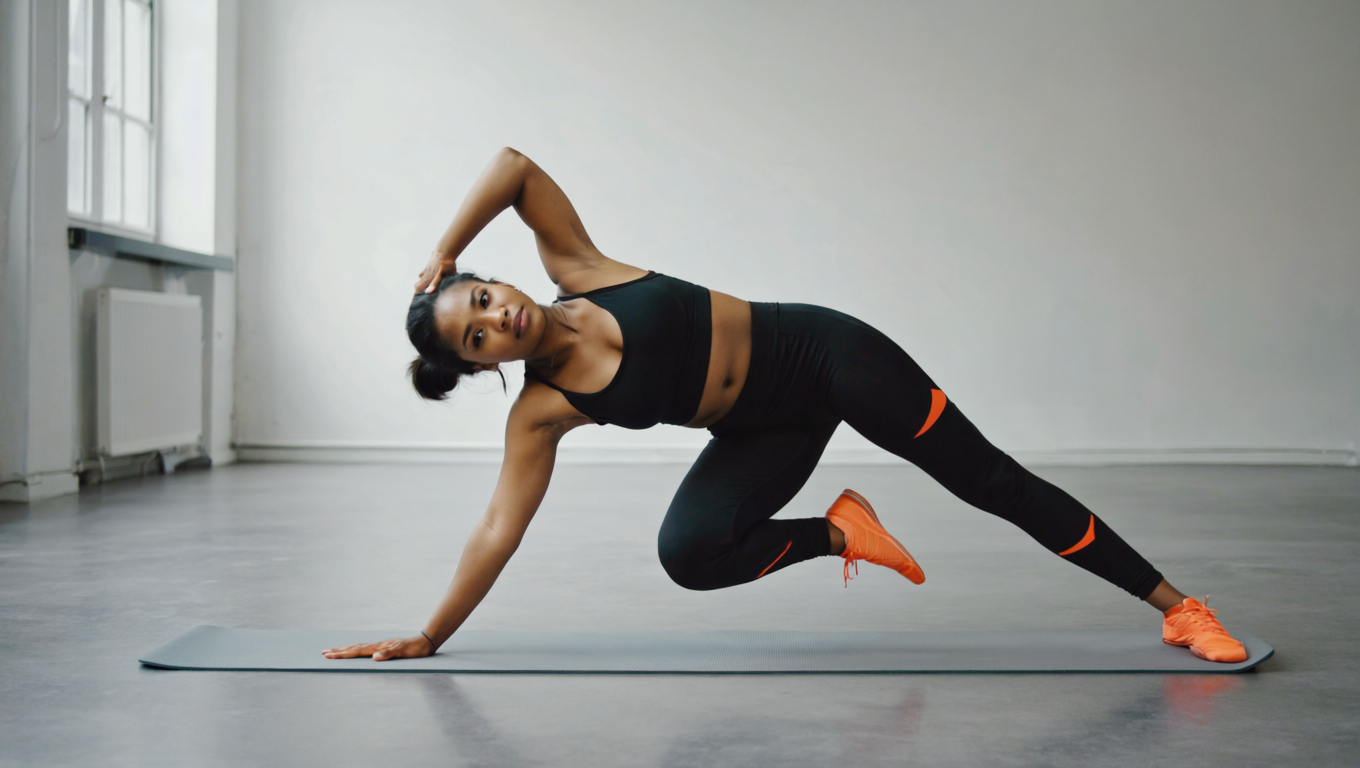
5) Side Plank (Vasisthasana)
Targets: obliques, shoulders, glutes. Side plank is a core anti‑rotation drill that also builds shoulder strength.
- Form: stack feet, lift hips high, body in one line.
- Progression: raise top leg or reach arm overhead.
6) Boat Pose (Navasana)
Targets: deep core, hip flexors, spine stabilizers. Boat pose is a direct core strength builder.
- Form: chest up, spine long, shins parallel to floor.
- Progression: straighten legs or add pulses.
7) Bridge Pose (Setu Bandha)
Targets: glutes, hamstrings, lower back. Bridge builds posterior chain strength and improves hip extension.
- Form: drive through heels, squeeze glutes at top.
- Progression: single‑leg bridge or longer holds.
Sample Strength‑Yoga Session (30–40 min)
- Warm‑up: 5 minutes (cat‑camel, hip circles, shoulder rolls)
- Plank: 3 x 30–45 sec
- Chaturanga holds: 3 x 20–30 sec
- Chair pose: 3 x 45–60 sec
- Warrior II: 2 x 45 sec each side
- Side plank: 2 x 30–45 sec each side
- Boat pose: 3 x 30–45 sec
- Bridge pose: 3 x 30–45 sec
Common Mistakes (And Fixes)
- Rushing holds: slow down, tension matters more than speed.
- Collapsed shoulders: press the floor and engage lats.
- Loose core: exhale to brace before each hold.
Breathing for Strength
Your breath is the engine of stability. In hard holds, the temptation is to hold your breath. Instead, use controlled exhales to keep the ribs down and the core engaged. A simple rule: inhale to prepare, exhale to brace, then keep breathing slowly while maintaining tension.
- Inhale: widen the ribs and set posture.
- Exhale: tighten core and lock in the position.
- Maintain: short, steady breaths without losing form.
Tempo Tip (Make It Harder Without More Time)
Slow transitions increase time under tension. Use a 3‑second lower and a 1‑second pause at the hardest point of each pose change. You’ll feel the difference immediately.
Weekly Plan (Progression in 4 Weeks)
Week 1–2: Foundation
2–3 sessions per week. Holds at 20–30 seconds. Focus on clean alignment and stable breathing.
Week 3: Volume
Increase to 3–4 sets per pose. Holds at 30–45 seconds. Add one optional finisher set for plank or chair.
Week 4: Intensity
Add leverage changes (single‑leg bridge, side‑plank leg lift, longer warrior holds). Aim for 45–60 seconds in your strongest poses.
Strength Transfer to Gym Training
Yoga strength carries into lifts and sports. Better core control improves squat and deadlift stability. Stronger shoulders improve pressing mechanics. Improved hip mobility helps depth and power.
- Squats: chair pose + warrior II improve quad endurance and hip control.
- Pressing: plank + chaturanga build scapular stability.
- Core: boat + side plank improve anti‑rotation strength.
Recovery & Nutrition for Strength Yoga
Isometric work creates deep fatigue. Treat it like training: recover well and eat enough. Aim for consistent protein intake, hydrate, and sleep 7–9 hours to rebuild tissue and keep joints happy.
- Protein: 1.6–2.2g per kg of bodyweight.
- Hydration: steady water intake; add electrolytes if you sweat a lot.
- Mobility reset: 5 minutes of gentle stretching after sessions.
Modifications That Keep You Progressing
If a pose is too intense, scale it without quitting the session. Use knees down in plank, shorten the range in chair pose, or keep the back heel lifted in warrior. The goal is quality tension, not pain.
FAQ
Can yoga build muscle like weights?
Yes—especially for beginners and intermediate lifters—if you apply progression and hold times. The stimulus is different, but the tension is real.
How many times per week?
2–4 sessions weekly works well. Pair it with lifting or use it as a main program.
Is it safe for beginners?
Yes. Start with shorter holds and controlled breathing. If a pose hurts, reduce range or use a modification.
Expert Take
“Yoga becomes strength training when you treat every pose like a lift: brace, breathe, and hold with intent.”
Conclusion
These seven poses can build real muscle when you progress them like training. Commit to 2–4 sessions per week, track your hold times, and prioritize perfect form. Strength is built through control, and yoga delivers it without a single machine.