Best No-Equipment Home Workouts for Busy People
The Science Behind Time-Efficient Workouts
Recent research in exercise physiology has revolutionized our understanding of workout efficiency. Studies published in the Journal of Sports Science & Medicine demonstrate that short, high-intensity bodyweight workouts can produce similar or even superior results to traditional longer sessions. The key lies in exercise density – packing more quality movement into less time.
When you eliminate equipment from the equation, you’re forced to focus on fundamental movement patterns that engage multiple muscle groups simultaneously. This creates a metabolic demand that continues long after your workout ends, a phenomenon known as excess post-exercise oxygen consumption (EPOC). Essentially, your body continues burning calories at an elevated rate for hours following an intense bodyweight session.
“Short workouts aren’t weak workouts if you push intensity. The human body responds to stimulus, not duration. A focused 15-minute session with proper form and maximum effort can outperform a distracted hour at the gym.” — Alex Stone, Certified Strength Coach
Essential Principles for Effective No-Equipment Training
Before diving into specific workouts, understanding these core principles will maximize your results:
- Progressive Overload: Without weights, you achieve this through increased repetitions, decreased rest time, or more challenging exercise variations
- Compound Movements: Focus on exercises that work multiple joints and muscle groups simultaneously
- Time Under Tension: Control each movement’s tempo to increase muscle engagement
- Mind-Muscle Connection: Concentrate on the working muscles rather than just completing repetitions
The 15-Minute Full Body Circuit
This circuit requires no equipment and can be completed in any small space. Perform each exercise for the prescribed time or repetitions, rest 30 seconds between exercises, and complete 3 rounds total.
Circuit Exercises
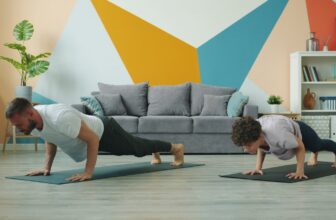
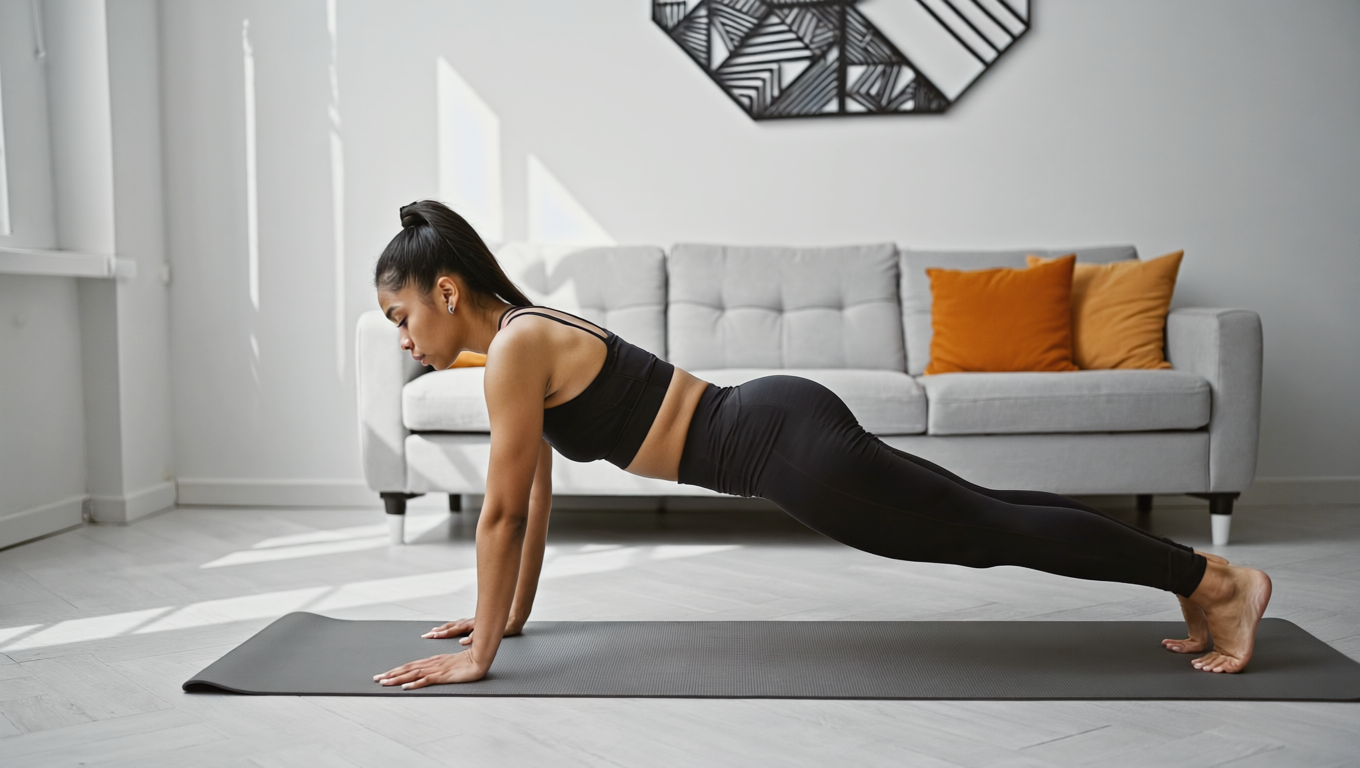
- Push-ups: 12-15 repetitions. Modifications: Incline (hands on chair) or knee push-ups for beginners
- Bodyweight Squats: 20 repetitions. Focus on depth and controlled movement
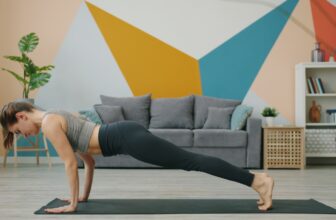
- Plank: Hold for 45 seconds. Maintain straight line from head to heels
- Alternating Lunges: 10 repetitions per leg. Keep front knee aligned with ankle
- Mountain Climbers: 30 seconds. Maintain plank position throughout
- Glute Bridges: 15 repetitions. Squeeze glutes at the top of each repetition
The 7-Minute High Intensity Interval Training (HIIT)
Based on research from the American College of Sports Medicine, this protocol alternates 30 seconds of maximum effort with 10 seconds of rest. Complete two rounds for a 14-minute workout.
HIIT Sequence
- Jumping Jacks: Full range of motion, arms overhead
- Wall Sit: Hold squat position against wall, thighs parallel to floor
- Push-ups: As many as possible with good form
- Abdominal Crunches: Controlled movement, don’t pull on neck
- Step-ups: Using a sturdy chair or step, alternate legs
- Squats: Full depth, chest up
- Triceps Dips: Using a chair or bench, keep elbows pointing backward
- Plank: Maintain perfect form
- High Knees: Run in place, bringing knees to hip height
- Lunges: Alternating forward lunges
- Push-up with Rotation: After each push-up, rotate torso and extend arm toward ceiling
- Side Plank: 30 seconds per side
Office-Friendly Micro-Workouts
For desk-bound professionals, these discreet exercises fit into 3-5 minute breaks:
- Chair Squats: 15 repetitions. Stand up and sit down without hands
- Desk Push-ups: 10-12 repetitions. Hands on desk, body angled
- Calf Raises: 25 repetitions. Use desk for balance
- Isometric Glute Squeezes: Hold for 30 seconds while seated
Progressive Overload Without Equipment
Keep workouts challenging as you improve:
- Increase Time Under Tension: Slow down each repetition’s lowering phase
- Reduce Rest Periods: Gradually decrease rest between exercises
- Advanced Variations: Progress to decline or plyometric push-ups
- Increase Volume: Add extra rounds or repetitions gradually
Common Mistakes to Avoid
Even simple bodyweight exercises can lead to injury if performed incorrectly. Watch for these common errors:
- Rushing Through Repetitions: Quality always beats quantity in no-equipment training
- Poor Breathing Technique: Exhale during exertion, inhale during relaxation phase
- Neglecting Warm-up and Cool-down: 3-5 minutes of dynamic stretching prevents injury
- Ignoring Proper Form: Sacrificing form to complete more reps reduces effectiveness
- Training Through Pain: Distinguish between muscle fatigue and joint pain
Nutrition for Busy People
Support your workouts with these time-efficient nutrition strategies:
- Protein Prioritization: Include protein with every meal for muscle repair
- Hydration Focus: Drink water consistently throughout the day
- Meal Prep Basics: Dedicate 2 hours weekly to prepare healthy staples
- Smart Snacking: Keep nuts, Greek yogurt, or hard-boiled eggs available
Creating Sustainable Habits
Build lasting fitness habits with these strategies:
- Schedule Workouts: Treat exercise like important appointments
- Start Small: Begin with 10 minutes daily rather than hour-long sessions
- Stack Habits: Pair workouts with existing routines
- Track Progress: Record workouts to celebrate improvements
Expert Tips for Maximum Results
Fitness professionals share top strategies for busy individuals:
“The most effective workout is the one you actually do. Stop searching for the ‘perfect’ routine and focus on consistency.” — Maria Chen, Personal Trainer
- Morning Momentum: Complete workouts first thing
- Clothing Preparation: Lay out workout clothes the night before
- Home Environment: Designate a specific exercise area
- Audio Motivation: Use energizing playlists or podcasts
Frequently Asked Questions
How many days per week should I do these workouts?
For beginners, aim for 3 non-consecutive days weekly. As you adapt, you can increase to 4-5 days, ensuring you include at least one full rest day for recovery.
Can I build muscle with only bodyweight exercises?
Absolutely. While you may eventually need additional resistance for maximum hypertrophy, bodyweight exercises can build significant muscle, especially for beginners and intermediates through progressive overload techniques.
What if I don’t have 15 consecutive minutes?
Research shows that multiple shorter bouts (like three 5-minute sessions) can be equally effective for cardiovascular health and calorie burning. The key is accumulating sufficient weekly volume.
How long until I see results?
With consistent training 3-4 times weekly, most people notice improved energy levels within 2 weeks, strength gains in 4-6 weeks, and visible body composition changes in 8-12 weeks.
Do I need any equipment at all?
These workouts require absolutely no equipment. However, a yoga mat can increase comfort for floor exercises, and a sturdy chair expands exercise options but isn’t necessary.
Conclusion
The barrier to fitness isn’t lack of time or equipment—it’s the misconception that effective workouts require both. These no-equipment home workouts prove that remarkable results are accessible to everyone, regardless of schedule constraints. Consistency, not perfection, is the true secret to lasting fitness. Short sessions add up faster than you might imagine, creating compound benefits for your health, energy, and confidence.
Start today with just 10 minutes. Choose one circuit, focus on proper form, and commit to repeating it three times this week. Your future self will thank you for taking this small but powerful step toward sustainable fitness. Remember: the best workout is always the one you actually complete.